
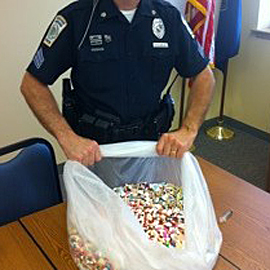
Got unused prescription drugs in your medicine cabinet? This weekend you can take them to one of over 5,200 collection sites throughout the US as part of the third bi-annual National Takeback Initiative prescription drug drop-off, sponsored by the Drug Enforcement Agency. The DEA is setting up drop-off sites in every state, from 10am-2pm Saturday, October 29, at police stations, hospitals, churches and their own offices. They’ve previously collected more than 309 tons of pills in these “takeback” events. “There’s no questions asked—you just drop them off,” said Chris Platz, parish manager of St. Patrick’s Old Cathedral in New York City, which has been a drop-off site since the initiative began in September 2010. Platz told The Fix the church has been contacted by people who don’t know how to dispose of powerful drugs left over from medical procedures: “I’ve had calls from people—they have OxyContin, they’ve had surgery and they’ve got like 97 pills left,” he said. “I don’t know what the street value of those things is but I think it’s pretty exorbitant.” According to the Justice Department’s National Drug Intelligence Center, OxyContin sells for between 50 cents and $1 per milligram on the street, with prices varying regionally. This comes from 2000, apparently the most recent year for which they have data, but anecdotal evidence agrees that a 20 mg pill, say, retails at roughly $20. So that bottle of 97 tablets could well bring in over $2,000. This temptation is part of the reason the DEA is so keen to get people to dispose of their unused medications. The other part is that prescription drug abuse is the fastest-growing sector of addiction today. According to the Substance Abuse and Mental Health Services Administration’s National Survey on Drug Use and Health, more than 7 million Americans abused prescription drugs in 2009, and many of these are kids who pilfer drugs from the family bathroom. So what happens to these huge piles of unwanted pills? “The DEA gets rid of them. They’re destroyed somehow—burned, flushed, something,” said Platz. Det. Domenick Vassallo, the contact person for the drop-off at NYPD’s 20th Precinct, agreed: “They flush ’em, I guess.” Not so. Instead, “We take them to a waste energy facility,” Special Agent Erin Mulvey from the DEA’s New York City office told The Fix. “They’re burned into energy for the tri-state area. All the states are disposing of them in this way. It’s an eco-friendly, win-win situation.”